


Key Points
– Converting a traditional IRA to a Roth IRA accelerates taxes rather than avoiding them.
– The best time to consider a Roth conversion is before Required Minimum Distributions (RMDs) begin.
– Factors like marital status, potential inheritance, and charitable donations can affect the decision.
Q. Dan, I will be required to start taking withdrawals from my IRA in 2030. We have military retirement pay, Social Security, and a small pension so my wife and I don’t need to take money from the IRA to pay bills. I’m thinking of converting it to a Roth IRA to avoid the taxes. What do you think? — Larry
A. Larry, first, thank you for your service.
We do hundreds of conversion analyses every year, so I clearly think converting is worth exploring.
I’m glad you are looking at this now. Prior to the onset of Required Minimum Distributions (RMD) is an excellent time to be thinking of Roth conversions because you are free to convert any portion of your IRA you want. Once RMDs begin, you can only convert IRA funds after taking the RMD and paying the tax on that first. The RMD itself cannot go into a Roth IRA or any other retirement account.
Your IRA is subject to a Required Minimum Distribution (RMD) beginning the year you turn 73 (75 for those born in 1960 or later). RMD must be completed every year for as long as there are funds in an IRA. No such requirement exists for your Roth IRA. Thus, converting turns off the RMD spigot. Because RMD triggers additional taxation, converting can be attractive. However, whether a conversion is wise for you specifically depends on a few factors.
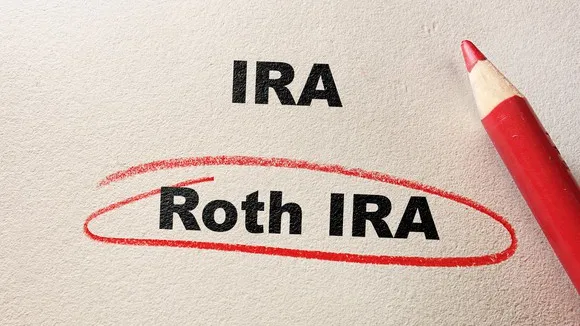
Conversions do not avoid taxes, they accelerate taxes. You pay tax now to avoid paying tax later. You benefit if the tax rate you can pay now is lower than the rate you would pay later.
To figure out the applicable tax rate on a conversion made in 2026, you would add the amount converted to all your other income and see how it changes the tax due. It is best to use professional tax software to do this because there can be some surprising results when more income is added on. I’ll go into that in more detail in a future column. We frequently see families that would experience higher rates than expected upon a conversion due to factors like crossing into higher marginal brackets, loss of deductions, and triggering additional taxes and costs like NII and IRMAA surcharges.
Life events (and Congress) can complicate the math
Figuring out the future rate that we avoid by converting is more challenging because the future is unknown. Congress could change the rules and there are other events that complicate the estimation.
For instance, when either of you die, the survivor will file as a single taxpayer in the year after the death. Single filers have a compressed set of tax brackets. For the same taxable income, singles pay a higher rate than a married couple. This possible higher future tax rate caused by the “widow’s penalty” makes a Roth more attractive. However, we don’t know how many returns will be filed as a single filer or the details on those returns.
Ultimately the funds go to heirs. Are you leaving the IRA to lower bracket heirs that will stay in a low bracket given the 10-year rule for Inherited IRAs or a charity that pays no taxes? If so, conversions make less sense. You would be paying taxes at your higher rate leaving less for your beneficiaries.
Note, if you are charitably inclined, Larry, you can reduce the effect of RMD by donating to charity directly out of your IRA once you turn 70 ½. When you reach RMD age, such donations can count toward the RMD yet completely avoid taxation.
Conversely, if you plan to leave these funds to higher tax bracket heirs, conversions could preserve money for them. You would be paying tax now at your lower rate to save them from paying at their higher rate when they inherit.
Dan Moisand, CFP® has been featured as one of America’s top independent fee-only financial planners by at least 10 financial planning publications and practices at one of America’s most decorated independent firms. For more info, e-mail him at dan@moisandfitzgerald.com, visit moisandfitzgerald.com or call Dan at 321-253-5400, ext. 101.
Originally published on FloridaToday. Read the original article here.