


SpaceX, inflation, and more from our investment committee
Jump to News and Important Dates
Text version of video:
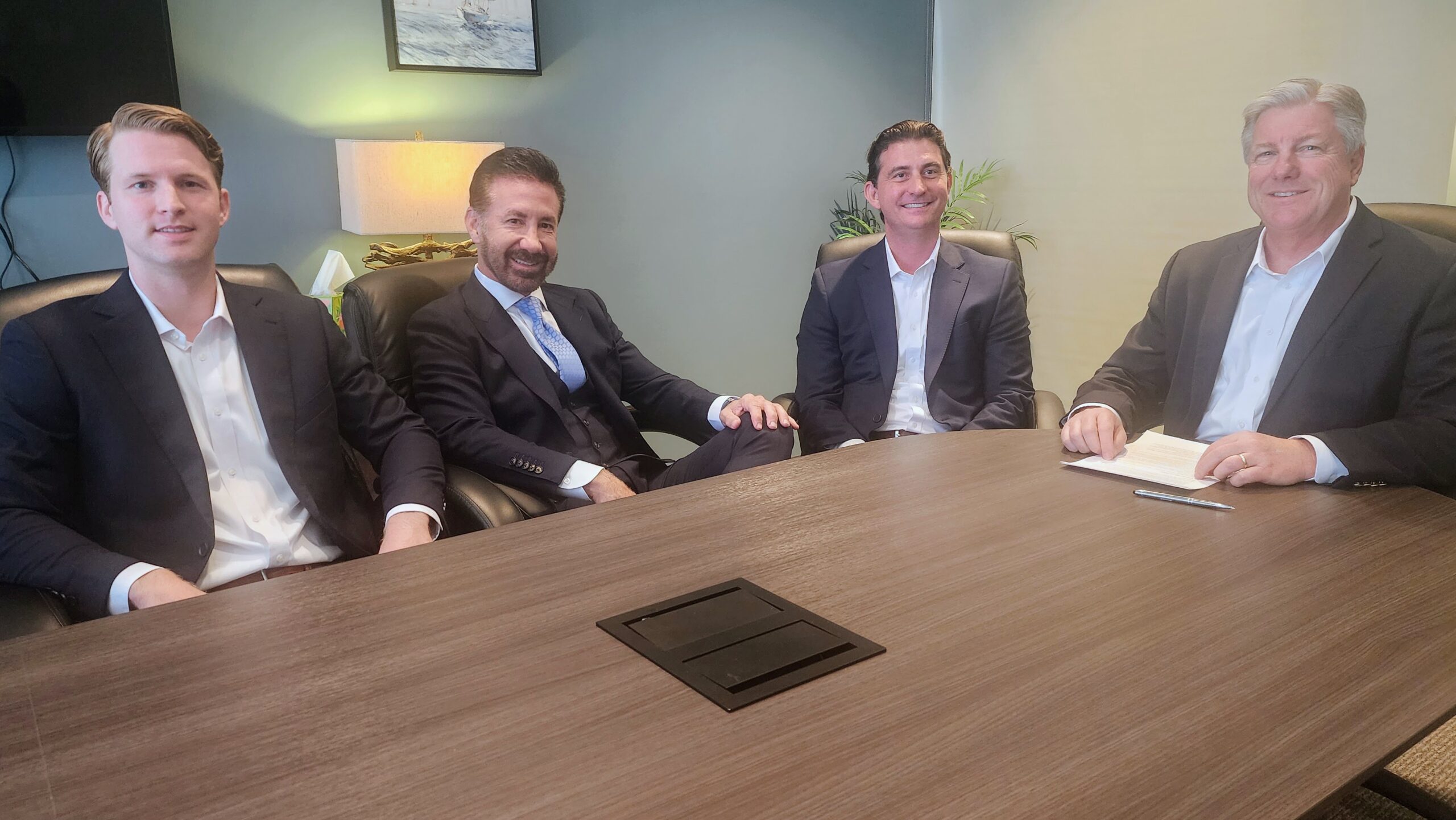
Dan: Welcome. From time to time, we like to bring members of our team together for a conversation. Today I’m joined by members of our investment committee: D.J. Hunt, Ron Tamayo, and Ryan Osborne. All of us are CERTIFIED FINANCIAL PLANNER™ professionals, and today we’ll talk about current investment issues, what our investment committee does, and how we think about client portfolios.
Inflation and Long-Term Investing
Dan: Lately, we’ve been hearing a lot from the media and from clients about inflation and high-profile IPOs. Ron, why don’t you start us off: what do we need to know about inflation?
Ron: Inflation is what I sometimes call the silent killer of purchasing power. It is something we model in all of our investment plans and retirement projections. Historically, we have modeled annual inflation assumptions ranging from 0% to 6%, and we have been doing that for more than 25 years.
Inflation has become a much more prominent topic in client conversations as a result of COVID, supply-chain disruptions, higher energy prices, and other pressures. We have seen spikes in prices coming out of COVID and additional pressures tied to global events. It has become part of political discussion, news coverage, client conversations, and everyday life.
The important point is that there is no magic-bullet investment product that reliably keeps pace with inflation, manages tax consequences, and reduces or avoids volatility all at the same time.
From time to time, different products are marketed as inflation solutions. For example, cryptocurrencies such as Bitcoin have sometimes been described as ways to protect purchasing power. While some have risen significantly in price at times, the volatility around those assets can be extreme and may also create significant tax consequences.
For us, the best long-term solution has historically been—and continues to be—a globally diversified portfolio that includes a meaningful allocation to equities. Going back to 1926, equities have historically outperformed inflation by a significant margin over long periods.
Historically, large-company and small-company stocks have generated long-term annual returns in the 10% to 12% range, while inflation has averaged roughly 3% over that same broad period. Recent inflation has been higher, of course, but that followed a long stretch when inflation was often below 3%.
When we run retirement models and Monte Carlo simulations, we regularly test inflation assumptions from 0% to 6%. We do not typically model deflation, because broad-based deflation is usually associated with very difficult economic conditions. The high inflation we saw coming out of COVID—around 2021 and 2022—was painful, with inflation reaching roughly 9% at one point.
And one of the biggest issues with inflation is the lasting effect. Many people hear that inflation has come down and assume prices will fall back to where they were. But inflation measures the rate at which prices are increasing. If inflation falls from 9% to 3%, that does not mean prices drop by 6%; it means prices are still rising, just more slowly.
Once prices reset higher, that tends to have a lasting impact. People continue to feel the effects for years. We are still feeling the effects of that inflation today. Housing, energy, health care, groceries—the things people buy and deal with most often—are where the impact has been most visible.
Dan: I cannot think of many things that have returned to pre-COVID prices.
Ron: Right. Again, there is no magic bullet. The best approach is to make sure long-term retirement assets are invested in a way that has historically provided a premium return above inflation. When you factor in taxes and inflation, the goal is to still have a positive real return. That generally cannot be accomplished by holding everything in very short-term Treasury bills.
Bonds may also struggle to keep up after inflation and taxes. Other investments may offer the possibility of higher returns, but they often come with much more volatility. Investors need to have the ability and willingness to tolerate that volatility, which is not always appropriate.
So the message is global diversification—stocks and bonds, large and small companies, U.S. and international exposure. That continues to be the best long-term answer.
Dan: Yes. Very few things hedge inflation well in the short run, and nothing does so consistently. Different assets may work in different periods, but there is no consistent short-term inflation hedge.
Space, IPOs, and Speculation
Dan: Let’s turn to another topic. We on the Space Coast, we get to watch rocket launches from our office windows and backyards. SpaceX has had a high-profile initial public offering. D.J., tell us about that.
D.J.: A lot of people on the east coast of Florida are talking about Space because of the local connection. It is a large employer in our area, and we have clients who work there. That makes this IPO feel different from many others because people have a more tangible connection to the company.
We heard from several clients asking how they might participate. But anyone who knows our investment philosophy knows that we generally avoid making concentrated bets, including investing directly in IPOs. Like many IPOs, this one rewarded the few people who got in at the offering price, but those who bought during or after the first-day excitement may not have had the same experience. It looked good for a short period, but then came back down.
It is exciting, and there is no question that the company has had a major local impact. But generally speaking, our investment philosophy avoids buying individual stocks because we do not know the future of any one company.
What we can understand more reliably is the long-term history of the overall market. As exciting as any IPO may be, we continue to emphasize broad diversification. Owning a little bit of many things gives investors a better chance of having something in the portfolio working, regardless of what is happening in any one company or sector.
Dan: There’s an old joke that IPO stands for “it’s probably overpriced.” With many highly followed IPOs, there can be an initial pop. But if investors rush in during the first few days, it often does not work out as hoped.
D.J.: You need to have a very long time horizon. We do not know whether today’s price will turn out to be high or low. Some companies and industries do not follow traditional valuation patterns, and smart people can make arguments on both sides.
Some investors may believe the stock has reached a top, while others may believe it has plenty of room to run. Nobody knows who is right. That is what makes a market: for every buyer, there must be a seller.
Eventually, if a company becomes large enough and meets the requirements, it may end up in index funds anyway. For our clients, this was one of the most talked-about IPOs I can remember in my career.
What the Investment Committee Does
Dan: Let’s change gears. Ryan, would you tell us what an investment committee does?
Ryan: Our investment committee helps the firm develop and maintain ideal client portfolios. That starts with a sound investment philosophy, then building portfolios around that philosophy and reviewing them periodically.
We discuss issues within the investment committee and then communicate with advisors and the tax team, so everyone is on the same page. From there, we work together to develop an appropriate asset-allocation approach. No asset class is risk-free on its own, so we need to decide what combination makes the most sense.
Then we evaluate the actual investments used within each asset class. We want the best investments we can identify for each role in the portfolio, and we monitor them over time. As markets move, portfolios drift, so we monitor those changes and make adjustments when appropriate.
A taxable account often requires a different approach than a qualified retirement account. We weigh the implications of making a change now, including whether paying taxes now makes sense or whether waiting may be better.
Our goal is for every account and every investment to have a purpose. We do not want to make changes based on guesses, anecdotes, or speculation. Decisions should be research-driven, evidence-based, and tied to the client’s plan.
Recent Committee Work: Investment Policy Statements and Alternatives
Dan: Ron, what has the committee been working on lately?
Ron: We have been busy. One major project has been a deep review of our Investment Policy Statement (IPS). The Investment Policy Statement lays out the parameters for how we manage a client’s portfolio. Those parameters and the recommended asset allocation are based on the client’s goals, cash-flow planning, retirement modeling, long-term return assumptions, and risk tolerance.
When clients come to us, they share their goals and objectives. We develop a plan, and that plan helps identify a target range of returns needed to pursue those goals. It is rarely a single number; it is usually a range. That gives us useful information for developing the appropriate asset allocation.
We then compare that with the client’s risk tolerance and risk capacity. Once we complete that work, we create an investment policy statement that outlines how much of the portfolio should be exposed to cash, stocks, bonds, and historically real estate.
One area we have been reviewing recently is that real estate category. After a lot of discussion, we have concluded that a better title for that area may be “alternatives.” Today, many investments fall under that broader umbrella, including private equity, private credit, hedge funds, real estate, and certain liquid alternatives.
The landscape has changed significantly. The U.S. public equity market is very large, but private markets have also grown substantially. From the investment committee’s point of view, that represents a significant market that many investors may not currently access.
We are evaluating whether and how to gain exposure to those assets in a cost-efficient and tax-aware way. As always, we want any exposure to be diversified. We do not want to put all of a client’s eggs in one basket or take unnecessary single-investment risk.
We have also simplified the layout of the investment policy statement to make it clearer and more concise. The previous version worked, but it was due for an update. D.J. and Brad worked on improving the language to make it more client-friendly and easier to understand.
We are excited about those changes and about continuing to study the alternatives space. We may be a little late to that party, but that is fine. We would rather be deliberate, perform our due diligence, and understand the risks before introducing something to client portfolios.
In some cases, members of the committee may even invest personally first to better understand how certain investments work in practice before considering them for clients. Those are some of the main areas we have been focused on.
Dan: You never run out of things to do. There is always something new coming to market. Over the years, we have changed parts of client portfolios when better alternatives became available. But not every new thing is good; some are just shiny objects that get attention.
Ron: Cost is an important factor for any investment. We are product-agnostic. If we can find a fund or product that fits our investment philosophy for a particular asset class and can do the same job at a lower cost, we are open to that.
Dan: That is part of being truly independent and working in our clients’ best interests. We are not tied to any product manufacturer. Investments need to stand on their own merit. Costs and taxes are two of the things we can actually manage within a portfolio.
Ongoing Monitoring and Fund Evaluation
Dan: D.J., what is the group planning to look at or do next?
D.J.: One thing we are constantly doing is evaluating the current holdings in client portfolios. That is an ongoing process. We review the funds used in each asset class and compare them with peers and benchmarks to make sure we are using the best options we can find, with an eye toward strong performance and low fees.
We want each fund to be efficient—high speed, low drag, as the saying goes. We do not care what a fund is called or who sponsors it. We have the ability to buy anything, so we are constantly evaluating whether what we hold is the best we can find.
We do not make changes very often, but sometimes a manager or fund simply stops keeping pace or no longer fits the role we need it to play. When that happens, we have the ability to replace it with something that does the job better.
The only way to know when it is time to make that kind of change is to evaluate consistently.
Congratulations to Ryan on becoming a CFA charterholder
Dan: Before we wrap up, I want to congratulate Ryan on becoming a CFA charterholder. That is a significant accomplishment. The CFA designation, Chartered Financial Analyst, is one of the most prestigious credentials in the investment management profession, and it is recognized globally.
Ryan, what made you pursue it?
Ryan: I thought it was a good opportunity to learn more about investments and financial markets in general, and to contribute more to the committee. The firm supported me along the way, and it felt like too good an opportunity to pass up.
Dan: We are glad you did it. I have looked at it several times over my career and always hesitated because of the time commitment. The exam pass rates make the accomplishment even more impressive. I went to the CFA website, got a some statistics about that. Get this. The general average pass rate for level one is just 41%. Level two it’s 45%. And for level three it’s a coin flip. So, very impressive. Congratulations.
Dan: With all the new opportunities out there, we remain committed to the idea that diversification, patience, and discipline are better than chasing shiny objects or speculating with life savings. Financial planning is the context within which we manage portfolios, and investment management is best done within that context. We want investment management to be customized to each family and what is important to them.
Thank you for joining us, and thanks to our guests for being here today. If you have questions about anything we discussed—or anything at all—please contact your advisor. We would love to hear from you. Have a great day.
In the News…
Ryan Osborne, CFP®, CFA, EA has become a CFA charterholder. The CFA stands for Chartered Financial Analyst, a prestigious global designation issued by the CFA Institute. It signifies high competence in portfolio management, security analysis, and ethics, requiring passing three rigorous exams and meeting experience requirements. Testing includes 3 six-hour exams and has a reputation for difficulty. According to the CFA Institute, CFA exam pass rates typically hover between 35% and 50% for most sittings, with 10-year averages generally resting at 41% for Level I, 45% for Level II, and 50% for Level III. For the Level III exam in February 2026, 50 percent passed. Chris Wiese, CFA, Managing Director, Education, CFA Institute, said: “The CFA Program equips candidates with a deep foundation of investment knowledge and helps develop the sound professional judgement that is so critical in today’s increasingly complex markets.”

Welcome to the team! In our ongoing quest to serve our clients well, we continue to add to our team. We recently welcomed to our team Talia Cristina – Sr. Tax Associate, Jessica Valdes- Sr. Tax Associate, Daniela Martinez – Client Service Manager, Victoria Menard – Client Service Manager, Noah von Bank – Financial Analyst, and Talia Hassell – Financial Analyst. Mr. von Bank and Ms. Hassell interned with us last summer. This summer we have three talented students interning in the Orlando office: Emelina Brown, Matthew Broich, and Adam Case.
If you are a member of an organization in need of a personal finance speaker, we are happy to talk with your group’s organizers about helping out at no cost.
DJ Hunt, CFP® shared some insights with Rethinking65 , a publication for advisors in “The Tax-Free Myth.” DJ explains the new enhanced senior deduction, how it works, and how it is misconstrued as a reduction in taxes on Social Security. “The enhanced senior deduction is a meaningful new tax benefit, but it is best understood as a temporary age-based deduction, not a repeal of Social Security taxation,” wrote DJ.
Dan Moisand,CFP® continues to write for Florida Today and MarketWatch, which are sometimes syndicated to other sites such as MSN & YahooFinance. (Some links may require a subscription to view.)
How much gold should you buy in retirement? Or do you need it at all? – Florida Today
What to know about investing in SpaceX — or any company — before it goes public – MarketWatch
Will this refinancing strategy reduce the tax bite from RMDs? – MSN via MarketWatch
Estate tax exemptions are permanent now. What does that mean for trusts? – Yahoo Finance (originally appeared in Florida Today)
You’ve inherited an IRA. What comes next and what can you do with it? – YahooFInance (originally appeared in Florida Today)
Notable
Congratulations to DJ: D.J. Hunt CFP® has joined the Board of Directors of the Southeast Region of the National Association of Personal Financial Advisors (NAPFA). NAPFA is the only organization exclusively for fee-only fiduciary advisors.
Developing the next generation of financial planners: Dan Moisand, CFP® spent a week in Denver serving as a mentor for the FPA Residency program. Mentors are highly experienced, respected for their financial planning knowledge, and hand-picked by the program. The four mentors worked with 28 residents on improving these newer planners’ interviewing and presentation skills. Said Dan, “There were long days, but it felt like a short week. It was incredibly gratifying to dig deep with the next generation of financial planners into how effective financial planning can profoundly impact clients’ lives. I feel blessed to be selected as a mentor and to be a part of such an iconic program within the FPA.”
Dan also served as a guest lecturer for the “Externship” program, a digital internship program for students and career changers interested in the financial planning profession but not able to arrange an in person internship. Our own Connor Ryan, CFP® is an externship alum.
Important Dates:
July 31
- Deadline for sponsors of retirement plans to file the 2025 Form 5500 (assuming a 12/31 plan year-end)
- Deadline for sponsors of retirement plans to file a Form 5558 (to extend the 2025 Form 5500 filing deadline until October 15)
September 15
- Q3 2026 estimated tax payment deadline for households
- Q3 2026 estimated tax payment deadline for sole proprietorships, single-member LLCs, C-corporations, and multi-member LLCs that elect to be treated as a corporation
- Extended 2025 income tax return (Form 1120S) filing deadline for calendar year S-corporations
- Extended 2025 income tax return (Form 1065 or 1065-B) filing deadline for calendar year multi-member partnerships and multi-member LLCs (default) July 1
September 30
- Determination date for identifying designated beneficiaries of retirement accounts whose owner died in 2025
- Deadline for employers to distribute the Summary Annual Report (SAR) to plan participants of 401(k) plans (assuming the 2025 Form 5500 filing deadline was not extended)
October 1
October 15
- Start of Open Enrollment Period for existing Medicare enrollees
- Extended 2025 income tax return (Form 1040) and gift tax return (Form 709) filing deadline
- Extended 2025 income tax return (Form 1040) filing deadline for sole proprietorships and single-member LLCs
- Extended 2025 income tax return (Form 1120) filing deadline for calendar year C-Corporations and multi-member LLCs that elect to be classified as a corporation
- Extended deadline for filing a calendar-based 2025 Form 5500
- Extended deadline for calendar-based sole proprietors and C-Corps to fund a 2025 employer contribution
Please remember to call us: When anything significant happens in your life, including changes in your finances, family, or health that could affect your financial plan, please let us know so that we can adapt our planning and portfolio work for you accordingly. Also, if you ever fail to receive a monthly statement for one of the Schwab Institutional accounts under our management, please let us know so we may assure Schwab delivers your statements promptly.